ICGC ARGO in Verona: progress, data, and where we go next
Members from 13 countries met in Verona for the 23rd ICGC Scientific Workshop and 10th ARGO Meeting, covering scientific progress, data governance, policy, and patient perspectives.
Verona, 23 to 25 June 2026.
Our 10th ARGO Meeting
ICGC ARGO members from 13 countries gathered in Verona, Italy for the 23rd ICGC Scientific Workshop and 10th ARGO Meeting. The agenda was deliberately broad. It covered scientific progress, data governance, legal and policy frameworks, and patient perspectives, on the view that none of these can be addressed in isolation. Local hosts at ARC-Net and the University and Hospital Trust Verona, welcomed the consortium.
Progress and highlights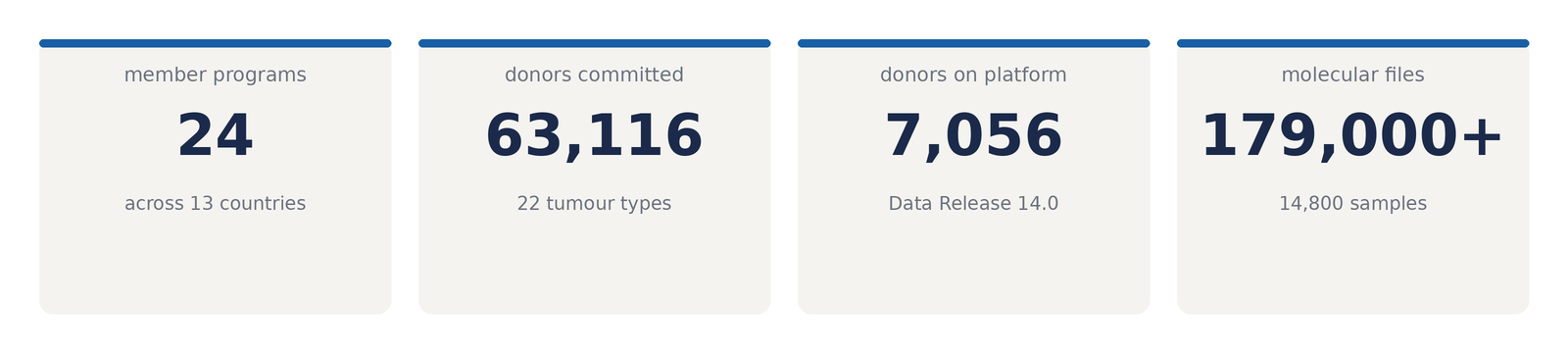
ICGC ARGO spans 24 member programs across 13 countries. Members have committed 63,116 donors, covering 22 tumour types, with a focus on advanced disease. The programs range widely: multi-cancer studies, rare cancers, and both prospective and retrospective cohorts.
Data Release 14.0 added new donors and updates to existing donors from six programs. The data platform now holds 7,056 donors and more than 179,000 molecular analysis files, covering 14,800 samples across 9 countries. Molecular workflows include DNA and RNA alignment and somatic variant calling. Clinical data spans primary diagnosis, treatment, and follow up.
Data access and compliance
Over 15 years, the Data Access Compliance Office has supported close to 6,000 research projects in 38 countries. DACO provides a single compliance pathway, consolidating oversight across dozens of institutions and jurisdictions. It maintains rigorous ethical, legal, and procedural standards that enable responsible, cross-border data sharing while preserving the confidentiality of research participants, supporting efficient and trusted collaboration in global cancer genomics research.
Building shared infrastructure
ARGO continues to work in the open. Its tools are available as open-source modules through the Overture software suite, and its quality control pipelines were adopted as the GA4GH reference implementation for whole genome sequencing quality control. A new discovery interface combines clinical and molecular filters, making it easier for DACO-approved researchers to find relevant donor data in one place.
A federated data system is being developed linking Toronto, Japan, and China, with expansion planned.
The consortium model
Session 5 stepped back to ask a bigger question: is the large-scale consortium still the right model for cancer research? Panellists from major global groups traced how the model has changed, from atlases to clinically integrated: prospective, longitudinal, and aimed at whether genomic knowledge changes outcomes for patients.
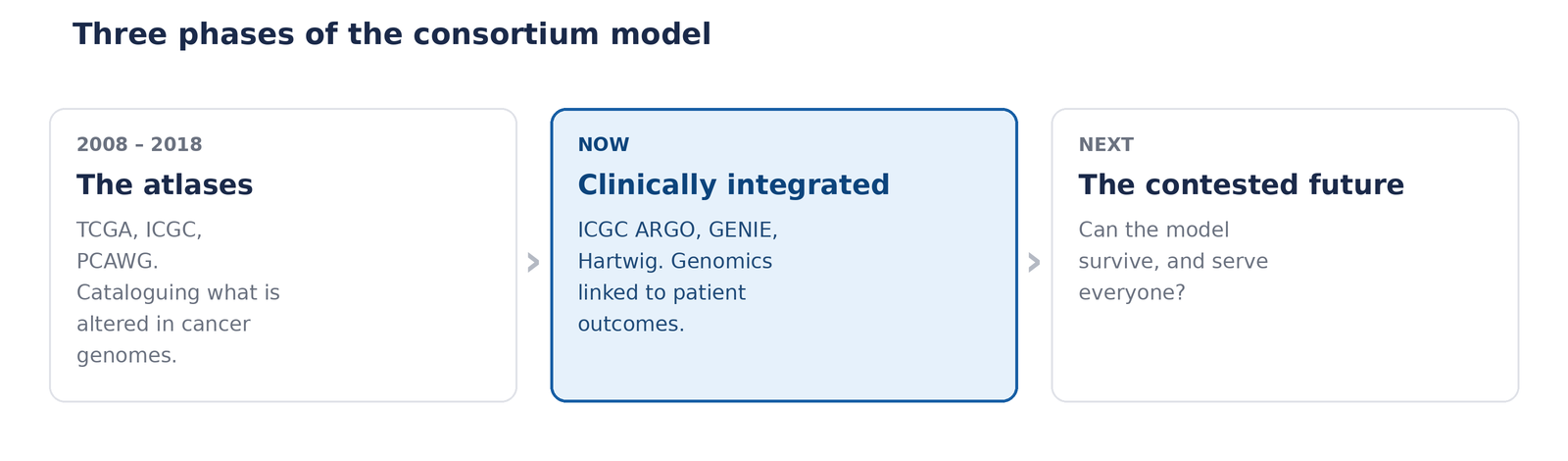
The discussion was candid about what comes next. Four pressures stand out: federation, sustainability, given that decade-long goals rely on short funding cycles; equity, so datasets represent the global population through genuine partnerships; and clinical linkage, the hardest promise to deliver.
ICGC ARGO in the global landscape
A high-level policy session brought together European Commission representatives, policy specialists, and patient advocates. The discussion reflected a clear shift. Governance of cancer genomics is now a matter of broad public interest, not a niche scientific concern. Cancer will affect close to half the population over a lifetime, and the frameworks that govern data sharing shape how quickly research reaches patients.
A consistent message was the absence of a sustained, cross-sector forum able to align researchers, policymakers, and patient advocates around shared governance challenges. The session also pointed to the value of engaging policymakers earlier and of extending collaboration where data governance frameworks are still developing.

Governance of cancer genomics is now a matter of broad public interest, not a niche scientific concern
ICGC ARGO Policy Session
The patient voiceDay 3 placed patients within the scientific program, with a keynote on patient perspectives, followed by the 'Precision Oncology for Whom?' panel. Discussion spanned the clinic, industry, lived experience, and science. A central point was that clinical measures and lived experience are often not the same thing. Success measured by scans and lab results can overlook how treatment affects daily life, work, and financial stability, and the language clinicians use can either open or close communication. The panel also took up major ethical questions, including access to genomic testing and treatment.
Priorities moving forward
Looking ahead, ICGC ARGO is focused on growing and diversifying its membership so the consortium better reflects the global cancer community, strengthening the infrastructure that supports secure international data sharing, and supporting the contribution of high quality clinical data. The consortium also aims to work more closely with policymakers and to broaden collaboration into new regions.
The 24th ICGC Scientific Workshop and 11th ARGO Meeting will be held in Beijing, China, from 15 to 17 May 2027.